Free worksheets / Kindergarten reading
Kindergarten reading worksheets
First grade reading worksheets: sight words, phonics and early reading practice that kids can do on their own.
21 sets · free worksheets to print today for every set
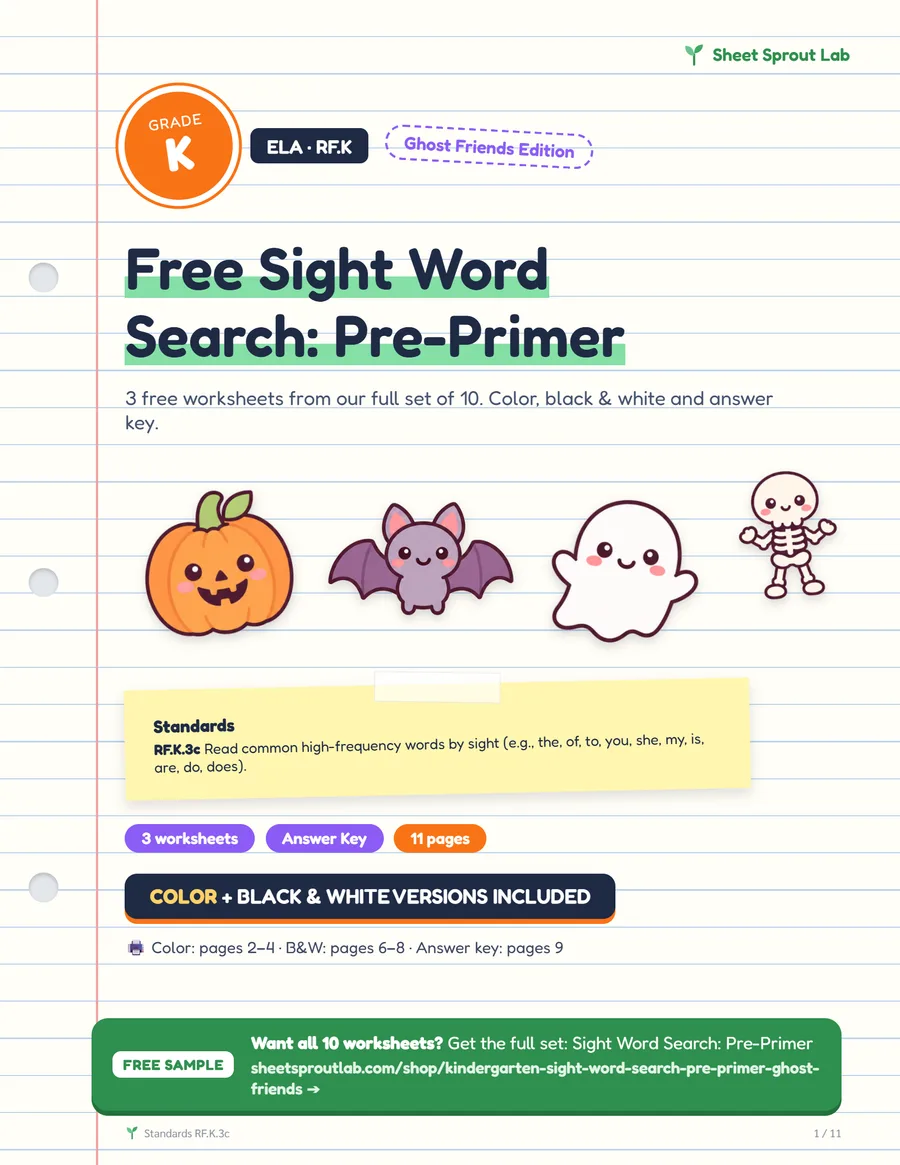
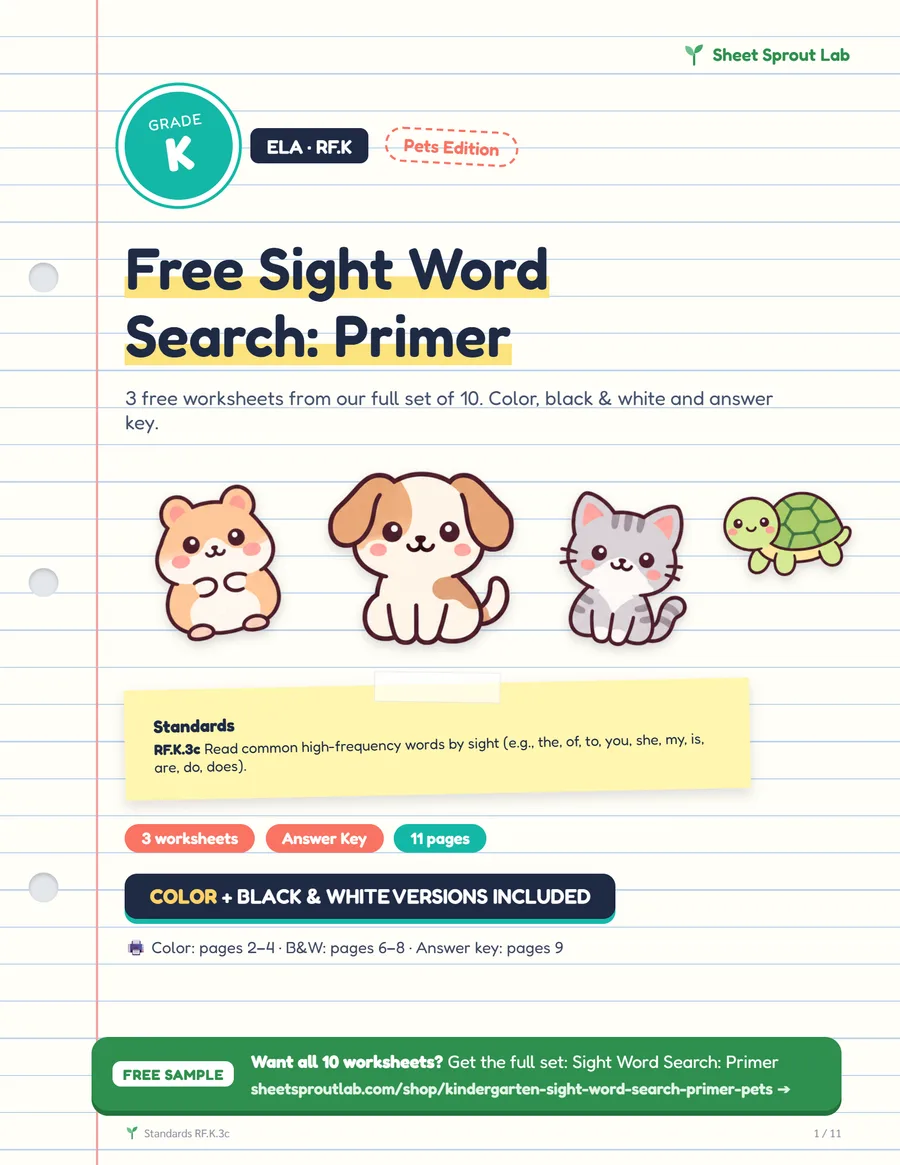
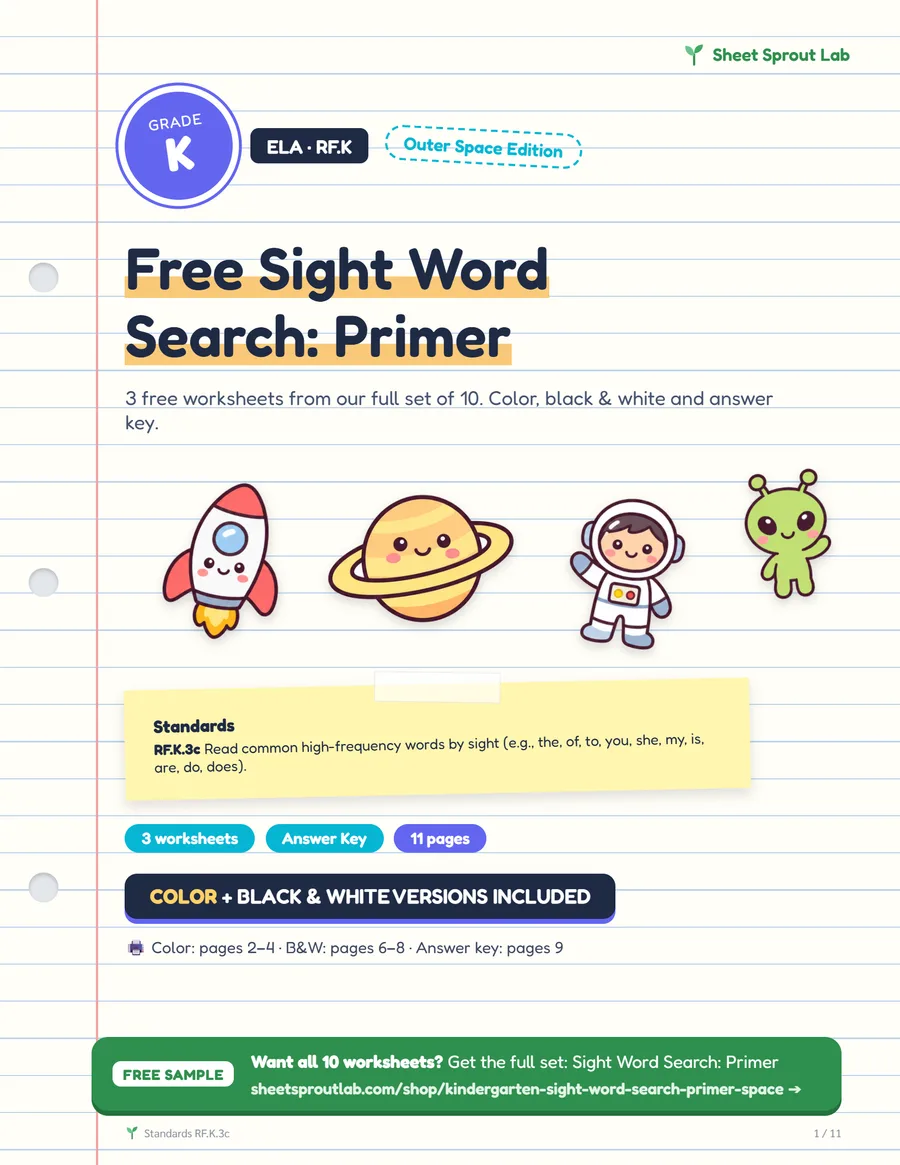
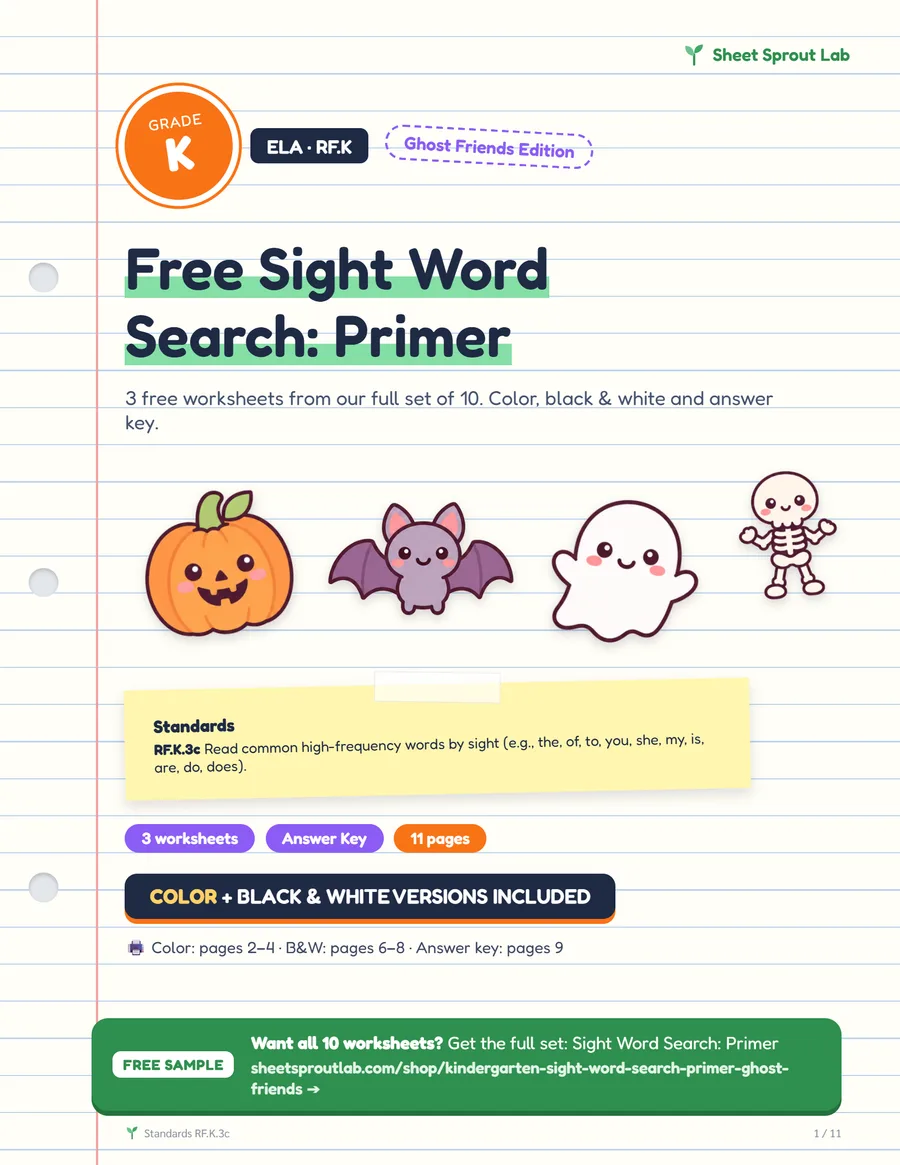
What kindergartners learn in reading and language arts
Kindergarten is where reading begins. Kids learn the names and sounds of the letters, hear and make rhymes, start to read a few common words by sight, and learn how books work: we read left to right, top to bottom, and words are separated by spaces. They also listen to stories and retell them.
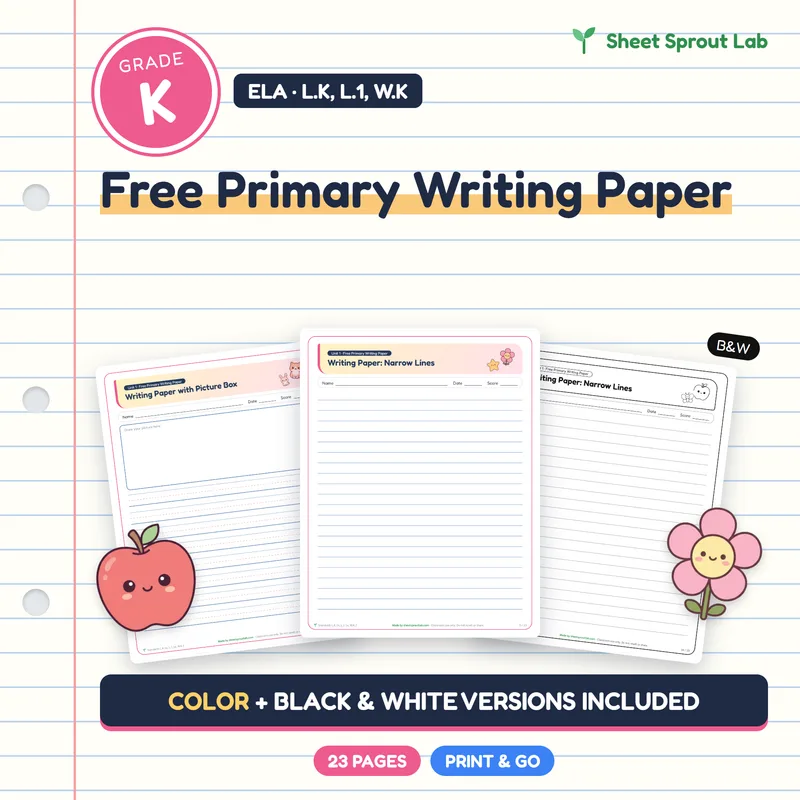
Writing starts with drawing and a few letters, then grows to a sentence. Short, hands-on pages give kids a win they can finish in a few minutes.
Skills kids practice
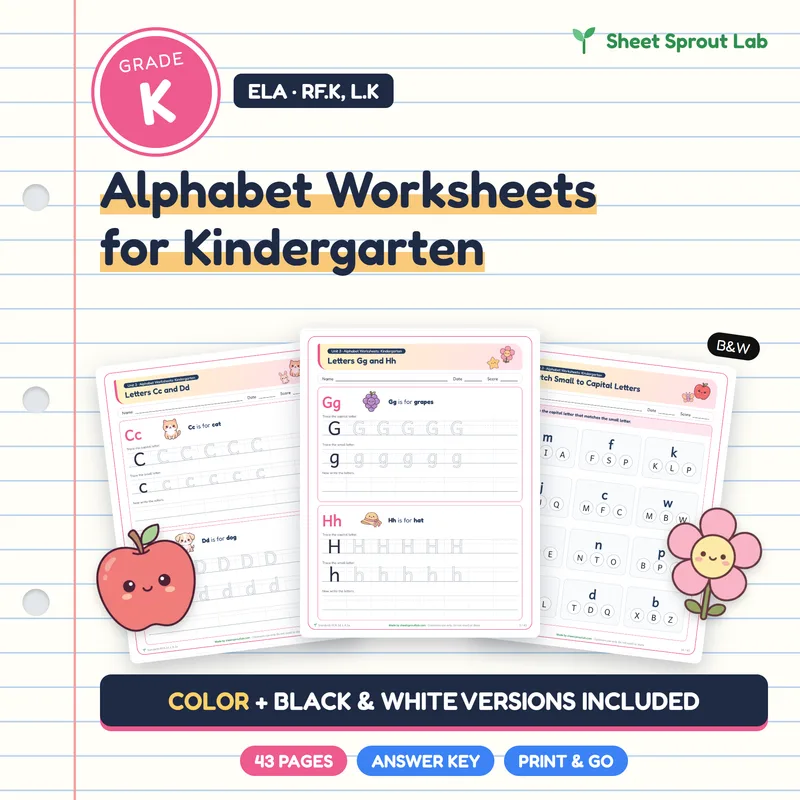
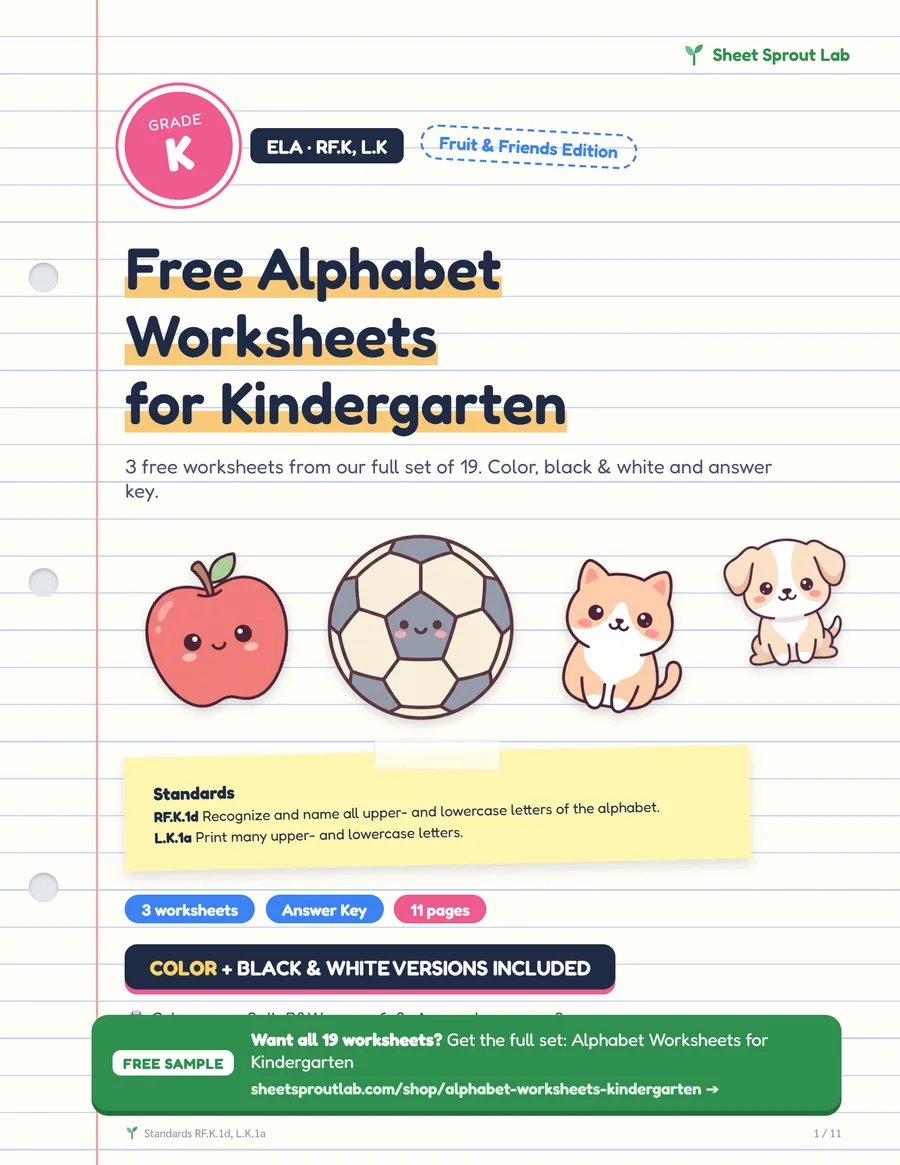
- Recognize and name upper- and lowercase letters (RF.K.1d)
- Match letters to their most common sounds (RF.K.3a)
- Recognize and produce rhyming words (RF.K.2a)
- Read a few common words by sight (RF.K.3c)
- Print upper- and lowercase letters (L.K.1a)
- Retell a familiar story with key details, with help (RL.K.2)
Tips for teachers and parents
- Read aloud every day and point to the words as you go. Kids learn how print works by watching.
- Work on letter names and letter sounds together instead of one after the other.
- Keep a small set of sight words on cards and add just one or two at a time.
Questions about reading & writing (ela) worksheets
What letters should kindergartners know?
The Common Core asks kindergartners to name all 26 letters in upper and lowercase and know the most common sound for each consonant and the short and long vowel sounds.
Should kindergartners be reading by the end of the year?
Most are reading simple books with repeated words and picture clues, and many read short sentences. The pace varies from child to child.
Standards covered
- L.1.1a Print all upper- and lowercase letters.
- L.K.1a Print many upper- and lowercase letters.
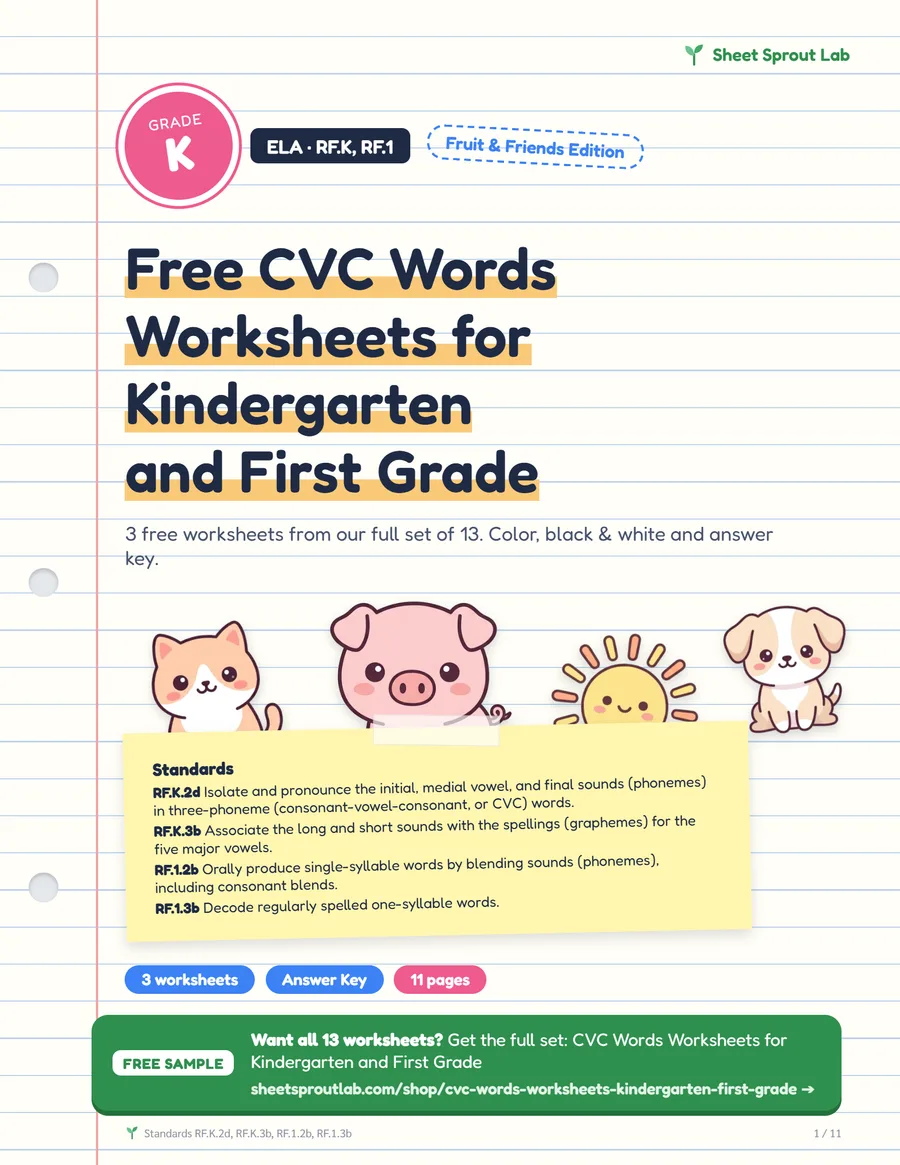
- RF.1.2b Orally produce single-syllable words by blending sounds (phonemes), including consonant blends.
- RF.1.3b Decode regularly spelled one-syllable words.
- RF.K.1d Recognize and name all upper- and lowercase letters of the alphabet.
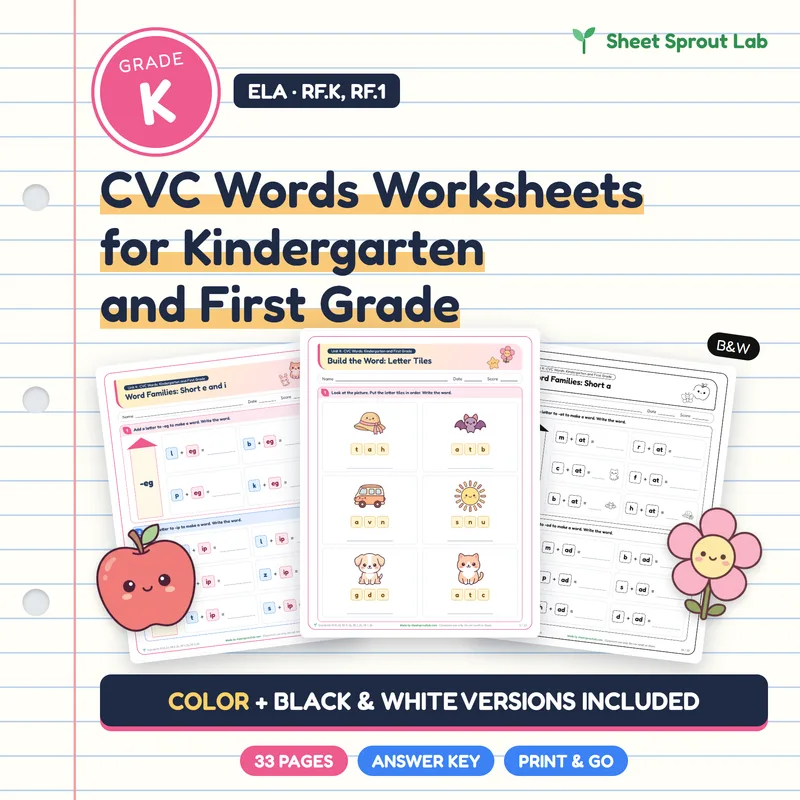
- RF.K.2d Isolate and pronounce the initial, medial vowel, and final sounds (phonemes) in three-phoneme (consonant-vowel-consonant, or CVC) words. (This does not include CVCs ending with /l/, /r/, or /x/.)
- RF.K.3b Associate the long and short sounds with the spellings (graphemes) for the five major vowels.
- RF.K.3c Read common high-frequency words by sight (e.g., the, of, to, you, she, my, is, are, do, does).
- W.K.3 Use a combination of drawing, dictating, and writing to narrate a single event or several loosely linked events, tell about the events in the order in which they occurred, and provide a reaction to what happened.