Free worksheets / Kindergarten reading / Writing
Kindergarten writing worksheets
Writing worksheets: sentence starters, opinion and narrative prompts with space to draw and write.
3 sets · free worksheets to print today for every set
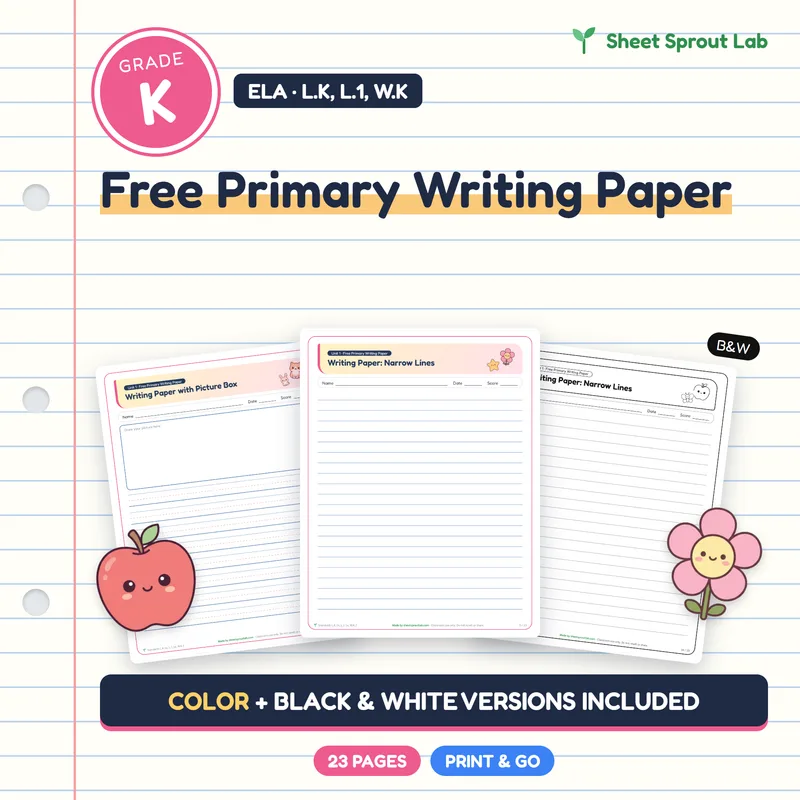
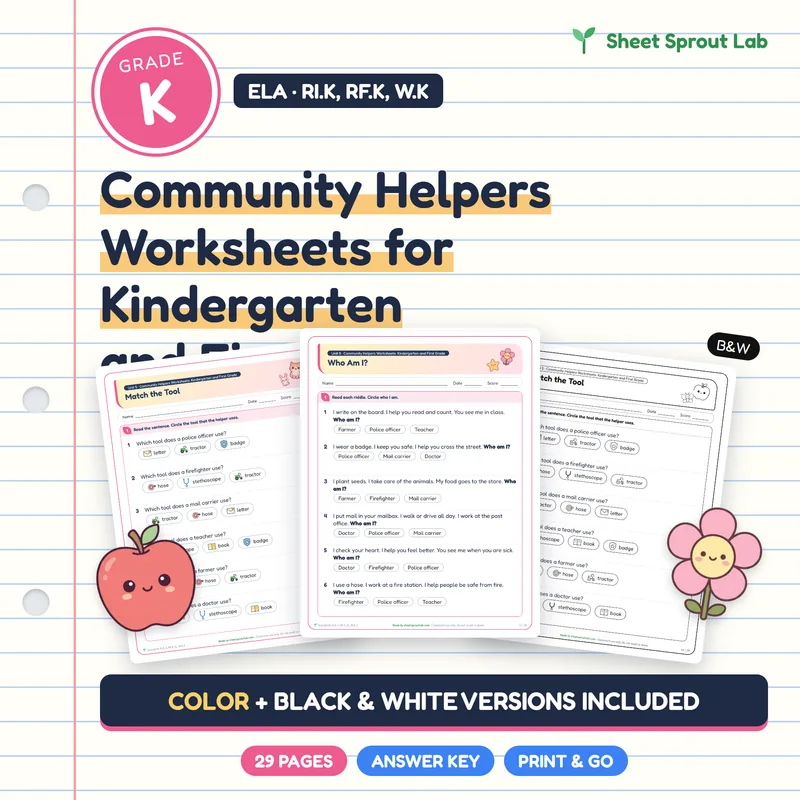
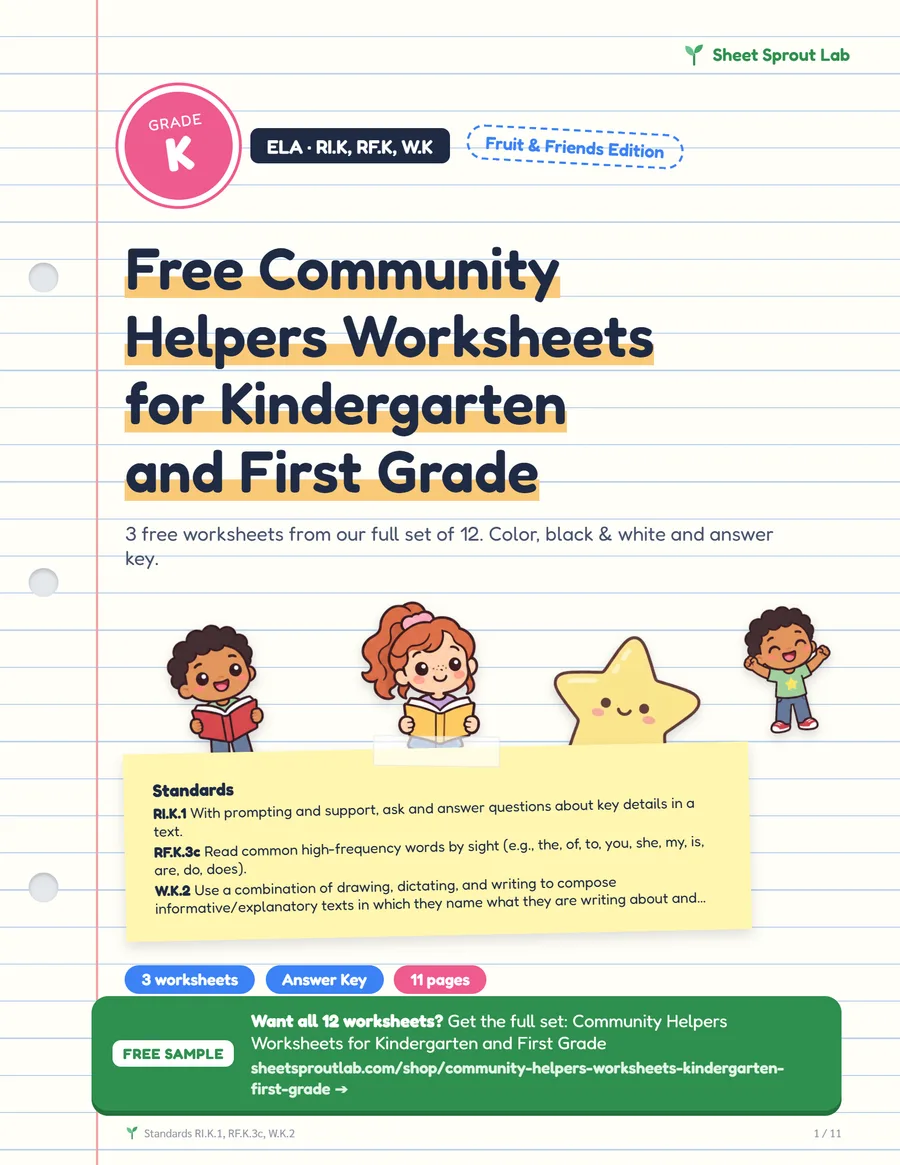
Early writing in kindergarten
Kindergarten writers use a mix of drawing, dictating and writing. A child might draw a picture of a dog, tell an adult what to write, and add the letters they know. This is real writing, and it builds the idea that print carries a message.
Kids write in three ways: they tell an opinion about a book or topic, they share some information, and they tell about a single event or a few connected events. Invented spelling is expected. Kids write the sounds they hear, such as "lik" for like, and it grows into correct spelling over time.
Skills kids practice
- Draw, dictate and write to share an opinion (W.K.1)
- Draw, dictate and write to share information (W.K.2)
- Tell about an event in order and give a reaction (W.K.3)
- Write letters for most consonant and short-vowel sounds (L.K.2c)
- Spell simple words by sounding them out (L.K.2d)
- Print upper- and lowercase letters (L.K.1a)
Tips for teachers and parents
- Ask your child to tell you about their drawing, then write one sentence under it.
- Praise the sounds they got right instead of correcting every spelling.
- Give a simple starter such as "My favorite ... is ... because ..." to get the first words going.
Questions about writing worksheets
Should kindergartners spell words correctly?
Not yet. They are expected to spell simple words by sounding them out. Correct spelling of more words comes with later grades.
How much should a kindergartner write?
At the start of the year it may be a picture and a few letters. By the end of the year many write one or more simple sentences.
Standards covered
- L.1.1a Print all upper- and lowercase letters.
- L.K.1a Print many upper- and lowercase letters.
- RF.K.3c Read common high-frequency words by sight (e.g., the, of, to, you, she, my, is, are, do, does).
- RI.K.1 With prompting and support, ask and answer questions about key details in a text.
- W.K.2 Use a combination of drawing, dictating, and writing to compose informative/explanatory texts in which they name what they are writing about and supply some information about the topic.
- W.K.3 Use a combination of drawing, dictating, and writing to narrate a single event or several loosely linked events, tell about the events in the order in which they occurred, and provide a reaction to what happened.